19 May 2026
Charting Behavioral Loops in Reward Cycles for Handheld Progressive Reel Games
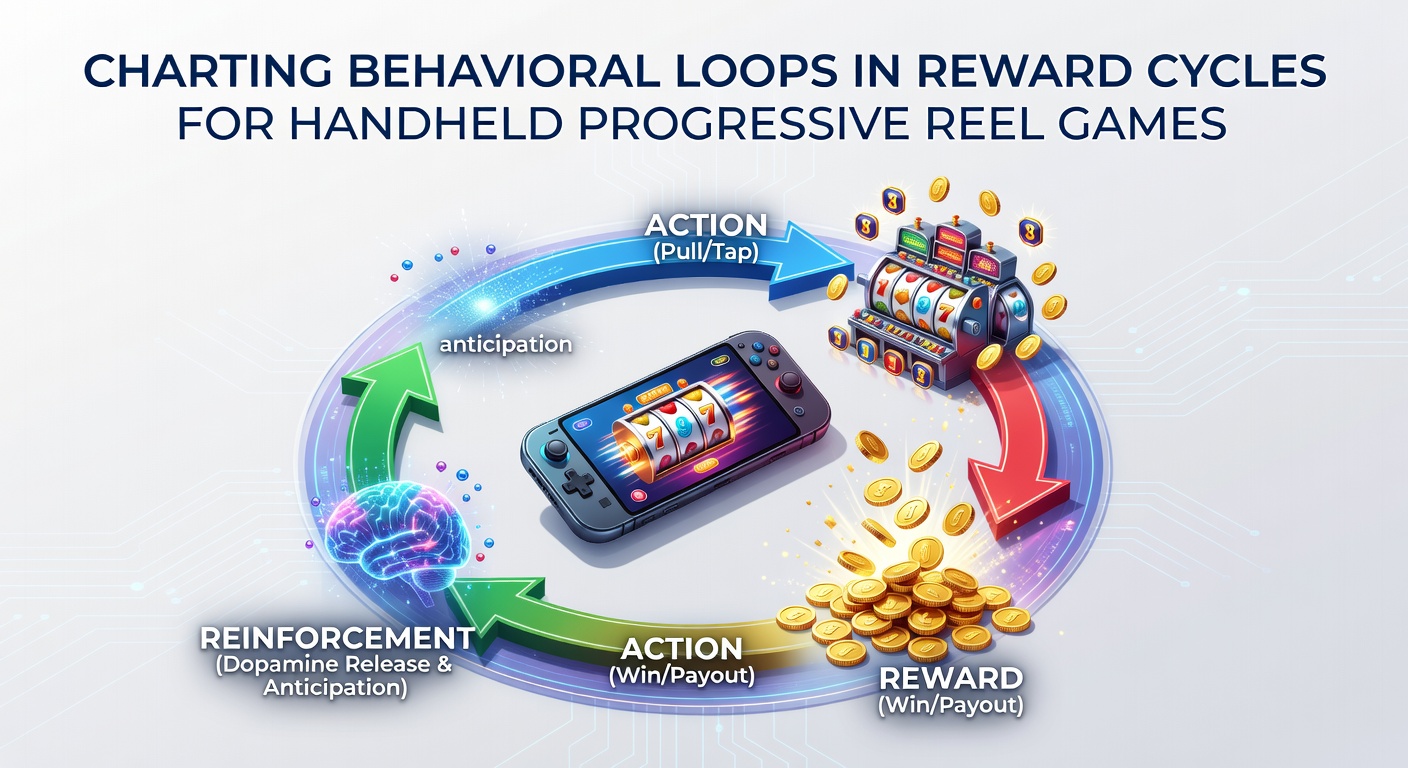
Players engage with handheld progressive reel games through repeated cycles that blend anticipation, outcome, and reinforcement, and researchers track these patterns to understand engagement dynamics. In May 2026 mobile platforms continue to refine reel structures that tie individual spins to growing jackpot pools, creating measurable loops where each result feeds the next decision point. Data from gaming analytics firms show session lengths extending when progressive meters climb visibly on screen, while near-miss animations appear at consistent intervals across popular titles.
Core Mechanics of Reward Cycles
Progressive reel games operate on variable-ratio reinforcement schedules that deliver payouts unpredictably yet frequently enough to sustain activity. Designers program reel strips so that high-value symbols land just outside winning lines more often than random chance alone would suggest, and this technique heightens the perceived closeness of a payout. Observers note that handheld formats amplify the effect because the smaller screen focuses attention directly on the meter and the spinning reels without peripheral distractions. Studies published by institutions such as the University of Nevada, Las Vegas document how these visual cues align with established principles of operant conditioning, where intermittent rewards strengthen continued play more effectively than predictable ones.
Handheld devices add touch-based feedback loops that register every tap and swipe as an immediate action with visible consequences. When a spin completes, the game delivers layered responses including sound effects, meter increments, and bonus triggers that all arrive within seconds. These rapid sequences compress the traditional reward cycle into shorter time frames, allowing players to complete dozens of iterations in a single session. Industry reports indicate that progressive elements further stretch the cycle by linking personal results to shared pools that rise across thousands of simultaneous users.
Behavioral Loops in Mobile Progressive Play
Behavioral loops emerge when each completed spin generates data that the game uses to adjust the next display. Progressive meters climb after every wager regardless of outcome, so the visual representation of accumulating value remains constant while individual results vary. Players encounter a sequence that moves from stake placement to reel resolution to meter update, and the loop restarts without requiring additional navigation. Researchers at McGill University have examined similar patterns in digital gambling environments and found that the continuous presence of an escalating jackpot correlates with extended play intervals compared to fixed-prize formats.
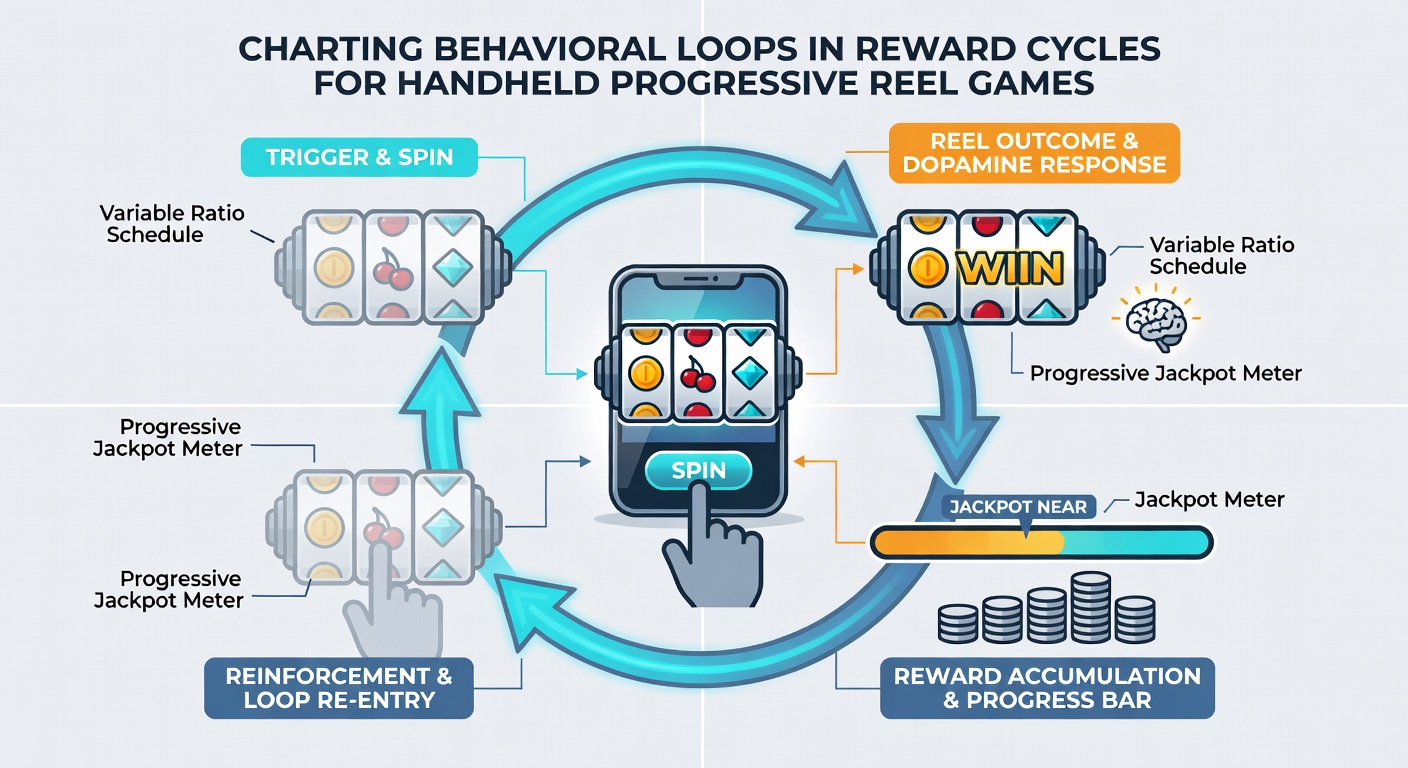
One-handed operation introduces additional variables because thumb movements coincide with on-screen events. Game engines register swipe speed and timing, then synchronize reel stops and sound cues to match user rhythm. When a near-miss occurs, the interface often pauses briefly before revealing the outcome, extending the moment of uncertainty. This design choice aligns with psychological findings on anticipation and has been incorporated into many progressive titles released or updated during the first quarter of 2026. Regulatory filings from the Nevada Gaming Control Board record increased player activity metrics on devices that employ these synchronized feedback systems.
Data Patterns Observed in 2026
Analytics platforms tracking handheld progressive games report that sessions initiated after jackpot meters exceed certain thresholds show higher average spin counts. The relationship holds across different titles and regions, suggesting the progressive feature itself influences duration rather than any single game mechanic. In May 2026 several major operators published aggregated statistics indicating that cross-device progressive networks now connect players from multiple continents, with meter growth rates accelerating during peak evening hours in each time zone. These shared pools create a secondary loop where global participation visibly affects individual screens.
Academic reviews of mobile gambling data emphasize the role of visual progression indicators in maintaining engagement. Charts derived from anonymized telemetry reveal clusters of spins that follow large meter jumps, with shorter pauses between actions during those periods. The pattern repeats across demographic groups, although exact frequencies vary by title and jurisdiction. Government agencies in Australia and Canada have begun requesting similar datasets from operators to assess how progressive structures interact with responsible gaming tools such as session reminders and spending limits.
Conclusion
Charting behavioral loops in reward cycles requires attention to the interplay between progressive accumulation, reel outcomes, and handheld interaction patterns. Current evidence from regulatory filings, university studies, and operator analytics shows consistent structures that repeat across titles and markets. As networks continue to expand in 2026, the measurable connections between meter growth and session behavior remain central to understanding how these games function within digital environments.