7 Jun 2026
How Push Notification Cadence Shapes Session Timing in Real-Time Casino Applications
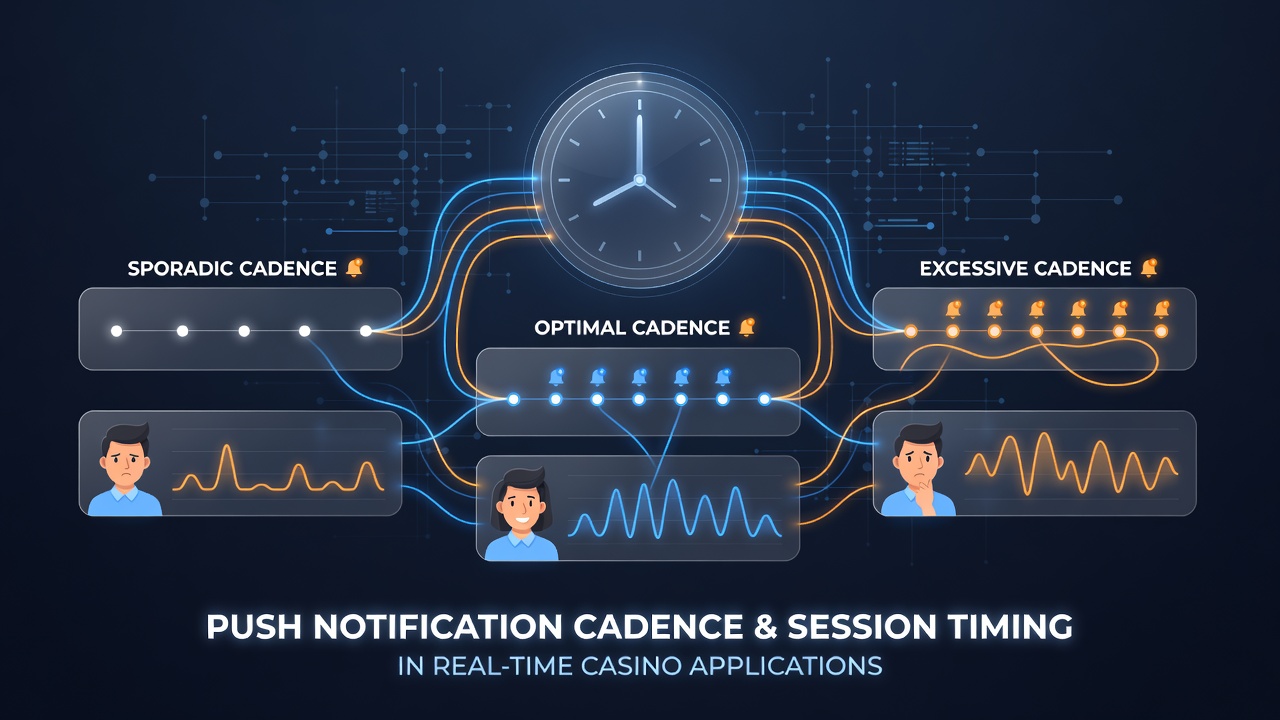 Real-time casino applications rely on push notifications to prompt user engagement, and the cadence at which these alerts arrive directly influences when players initiate sessions along with how long those sessions last. Operators adjust frequency, spacing, and content triggers based on aggregated behavioral data, while players respond in measurable patterns that emerge across different notification schedules.
Defining Cadence and Its Core Components
Cadence refers to the interval between notifications, the total volume sent within a 24-hour window, and the alignment of those messages with user activity peaks. Applications send alerts about bonus availability, live dealer table openings, or progressive jackpot updates at intervals ranging from 15 minutes to several hours. Research from the University of Nevada Reno gaming analytics program shows that shorter intervals correlate with more fragmented logins, whereas wider spacing tends to consolidate activity into fewer but extended periods.
Timing precision matters because casino apps operate in environments where users check devices intermittently throughout the day. Data collected from major platforms indicates that notifications arriving during commute hours or lunch breaks generate immediate session starts, while those sent late in the evening extend existing play rather than initiate new sessions.
Session Initiation Patterns Linked to Notification Spacing
Studies tracking thousands of accounts reveal distinct initiation clusters tied to cadence. When operators space notifications at two-hour intervals, session starts cluster around those exact delivery times, creating predictable waves of activity. Narrower cadences under 45 minutes produce overlapping alerts that some users dismiss, resulting in delayed logins that occur 30 to 60 minutes after the first message.
Applications using event-driven triggers rather than fixed schedules show different results. A notification sent immediately after a jackpot hit on a linked progressive title draws players within five minutes on average, according to aggregated telemetry from North American operators. This immediate response shortens the gap between awareness and action compared to routine promotional messages.
Duration and Depth of Play Under Varying Cadences
Session length responds to how notifications interrupt or sustain momentum. Frequent alerts during an active session often shorten total playtime because players exit to check other messages or switch apps. In contrast, a single well-timed notification after 20 minutes of inactivity can re-engage users for an additional 12 to 18 minutes on average.
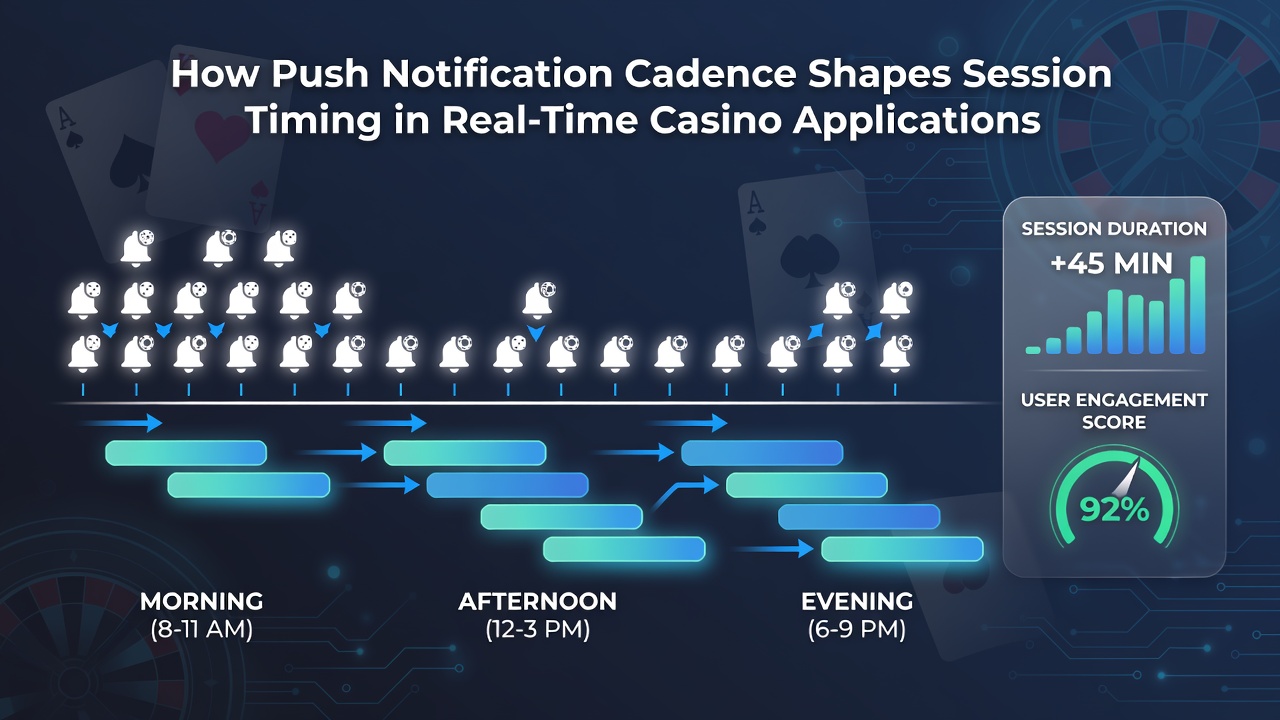
June 2026 platform reports from several U.S. states documented that campaigns maintaining three to four notifications per day produced the longest average sessions, reaching 47 minutes compared with 31 minutes for daily single-alert approaches. Those figures emerged from controlled A/B tests that held creative content constant while varying only delivery frequency.
Regional Regulatory Context and Measurement Standards
Canadian provincial regulators and the Malta Gaming Authority both require operators to log notification delivery alongside session metrics for compliance audits. These records allow researchers to isolate cadence effects from other variables such as deposit bonuses or new game releases. Figures released through the American Gaming Association's mobile subcommittee indicate that operators who align cadence with time-zone clusters achieve more consistent session timing across distributed user bases.
External validation comes from independent academic work examining mobile engagement loops. One analysis of real-money gaming telemetry found that notification fatigue sets in after five consecutive alerts within a four-hour window, after which session initiation rates drop by roughly 22 percent until the following day.
Practical Adjustments Operators Apply
Development teams refine cadence through iterative testing that monitors open rates, click-through to app launch, and subsequent session duration. Machine learning models now predict optimal spacing for individual accounts based on historical response curves rather than applying uniform schedules to entire user segments.
Live dealer applications add another layer because real-time tables require synchronized player availability. Notifications announcing table openings 15 minutes in advance produce higher join rates than those sent at the moment of availability, giving users time to prepare without losing the sense of immediacy.
Conclusion
Push notification cadence functions as a controllable variable that shapes both the temporal distribution and length of player sessions in real-time casino applications. Operators who calibrate intervals against observed behavioral data achieve more predictable engagement windows, while regulatory frameworks in multiple jurisdictions ensure these practices remain measurable and auditable. Continued refinement through platform analytics and academic review supports ongoing adjustments that match evolving user patterns.